Last updated November 25, 2026
How to Hire an ADU Contractor in Tacoma: A Step-by-Step Guide
Twenty years of custom home builds does not prepare a contractor for Tacoma’s ADU permit process. That’s the part most homeowners get wrong. They vet for generic construction credentials – portfolios, reviews, license status – and skip the only question that matters: has this builder actually taken an ADU through Tacoma’s planning and building departments? An ADU runs on a different workflow than a remodel. Zoning, utility coordination, and the pre-application phase all move on their own track, and a builder who hasn’t navigated it is learning on your dime. This guide shows you how to tell an ADU specialist from a general contractor who dabbles, what your contract should include, and how to structure payments. From Tacoma to the last inspection, here’s what to look for.
Quick Answer
To hire an ADU contractor in Tacoma, vet for ADU-specific permit history rather than general construction experience. Ask for a permit record pull from the city, confirm the builder handles design and permit filing in-house, and check that your contract spells out permit contingencies, utility coordination, and milestone-tied payments. The right hire is an ADU specialist who owns the project from design through final inspection under one contract, not a general contractor handing off phases to someone else.
Table of Contents
- Why “Hire a Contractor” Is the Wrong Frame for an ADU
- The Five Questions That Separate ADU Specialists from Dabblers
- How to Pull an ADU Permit History in Tacoma
- What a Design-Build ADU Contract Should Include
- Why Prefab Authorization (Abodu, Cover, Dvele) Signals a Vetted Builder
- Red Flags in ADU Bids
- How to Structure Your ADU Payment Schedule
- Prefab vs. Custom: How to Match Your Lot and Budget
- Common Mistakes to Avoid
- When to Call a Professional
- Frequently Asked Questions
- The Bottom Line
Why “Hire a Contractor” Is the Wrong Frame for an ADU
An ADU is not a small house. It’s a permit-driven accessory structure with its own zoning constraints, utility connections, and inspection sequence. That difference is exactly what trips up homeowners who shop for an ADU the way they’d shop for a kitchen remodel.
A general contractor with a long custom-build résumé has never had to answer the questions an ADU forces: how does the lot’s zoning handle a second dwelling unit, where do the utility runs connect, and which pre-application steps does the city require before plans are accepted? These aren’t construction skills. They’re process skills, and they’re specific to accessory dwelling work.
That’s why the right hire is a builder who treats design and permitting as part of the scope, not a hand-off problem. In practice, that means an ADU Builder Tacoma practice that files plans and manages the permit process – not a contractor who tells you to bring your own architect before they’ll even start.
When those phases live with one team, one company is accountable from first design consultation through certificate of occupancy. When they’re split across an architect, an expediter, and a builder, every gap between them is a place your project can stall, and you’re the one coordinating it all.
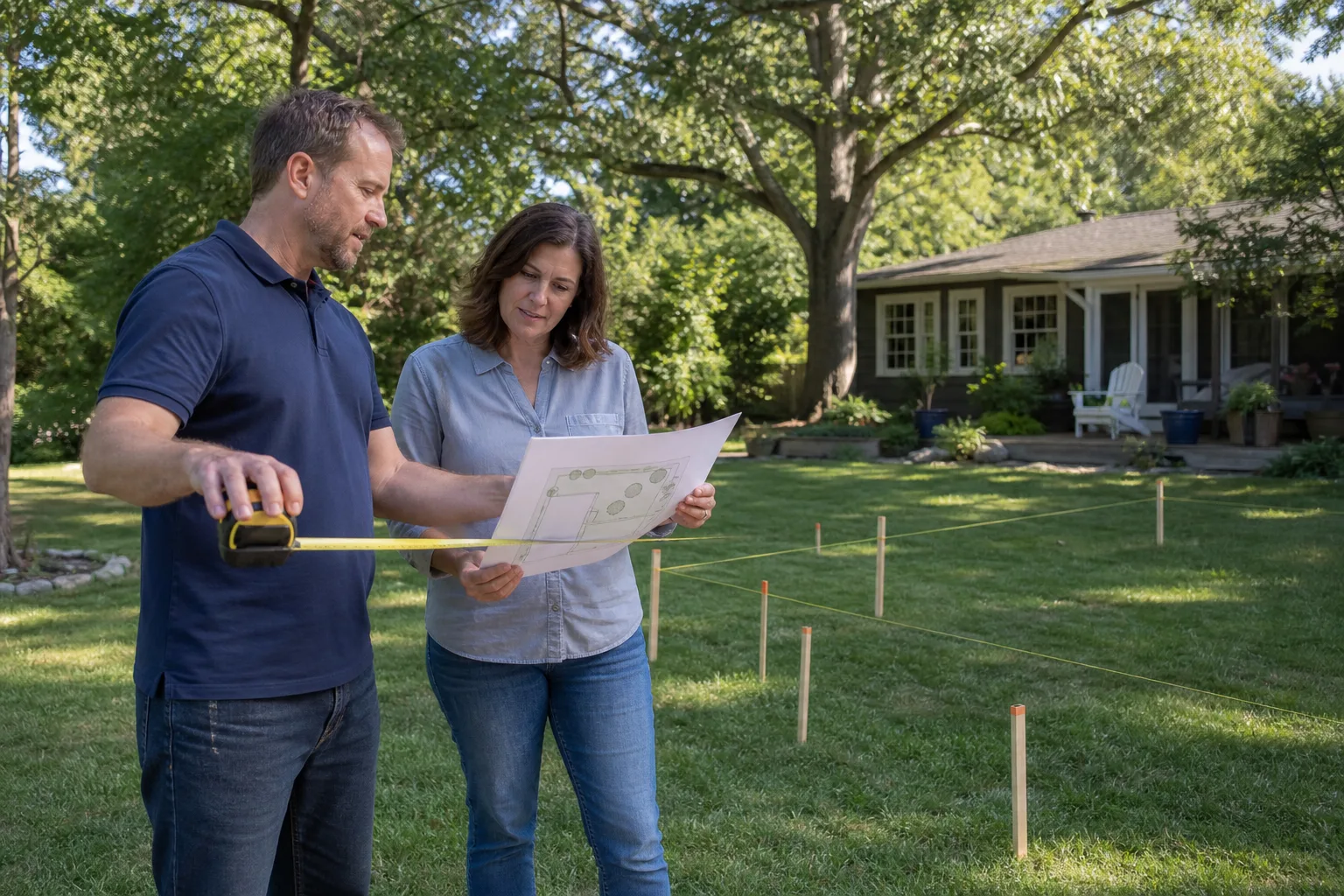
Tacoma’s older housing stock and its mix of narrow lots and deep backyards make this especially important. A builder who knows the city’s planning counter knows what to expect from the pre-application phase. A builder who doesn’t is going to learn it at your expense.
The Five Questions That Separate ADU Specialists from Dabblers
Ask these five questions before you sign anything. The answers tell you more than any portfolio.
- How many ADUs have you permitted in Tacoma in the last two years? Not built – permitted. Ask for a specific number and be ready to verify it. A specialist gives you a real answer. A dabbler deflects to total projects.
- Can you pull the permit history from the city, or should I? A confident builder will offer the pull. If they hesitate, that’s the answer.
- Who files the permit, and whose name is on it? If the answer includes “your architect” or “an expediter we sometimes use,” design and permitting aren’t really in-house.
- How do you handle utility coordination? Water, sewer, and electrical connections have their own approval sequence. Ask who owns that scheduling: the builder, or you?
- How is the payment schedule tied to the work? Milestone-based draws are the mark of a builder who’s done this before. Calendar-based payments are the mark of one who hasn’t.
Write the answers down. A specialist won’t mind – they’ve answered all five before.
How to Pull an ADU Permit History in Tacoma
References are easy to arrange. A permit history is not. That’s why pulling the record with the city is the single most reliable check on whether a builder actually does ADU work.
Here’s the process, step by step:
- Ask the builder for their permit history on ADU projects. Any builder serious about ADU work will offer the pull before you ask. If you’re the one prompting it, that’s already a signal.
- Confirm the permits are for accessory dwelling units specifically. A garage addition or a home office addition isn’t the same thing. Look for permits labeled as ADUs, accessory units, or JADUs.
- Check the status and dates. Permits that were issued, inspected, and closed out tell you the builder finishes what they start. Open or expired permits tell you something else.
- Match the permit addresses to the city. A builder with ADU history in other jurisdictions may still be new to Tacoma’s process. That’s not disqualifying, but it’s worth knowing.
- Ask how the pre-application phase went on those projects. The builder who can talk through the pre-app sequence from experience is the one you want.
In our experience, this single check eliminates most of the risk in choosing an ADU builder. It’s also the step homeowners skip most often, because it takes more work than reading reviews.
What a Design-Build ADU Contract Should Include
A standard general contractor contract leaves out three things an ADU project needs. Read your contract for each of them before you sign.
- Permit contingency clauses. Your contract should spell out what happens if the city requires plan revisions, additional review, or a change in scope during permitting. Who covers the cost of revisions, and how are schedule changes handled? Without a contingency clause, those costs land on you by default.
- Utility coordination responsibility. The contract should place utility coordination – water, sewer, electrical connections and their approvals – clearly with the builder, not with you. A contract that’s silent on this leaves you making calls to utility departments in the middle of construction.
- Inspection scheduling. Each phase of construction requires inspection, and inspection scheduling is a workflow with its own timing. Your contract should state that the builder owns it, from first inspection through final sign-off.
Together, these three clauses are what “one contract from design through final inspection” actually means on paper. Everything else – scope of work, specifications, payment schedule, warranty – should be laid out in the same document.
Ask your builder to walk you through each clause. A specialist will. A contractor who stumbles on “permit contingency” has never written one for an ADU. That’s the difference you’re hiring for.
Why Prefab Authorization (Abodu, Cover, Dvele) Signals a Vetted Builder
When a builder is authorized to install a specific prefab ADU line, it means that manufacturer has vetted their training, their installation process, and their code knowledge. That’s a meaningful third-party check on whether a builder actually knows what they’re doing.
ADU Builder Tacoma is authorized to build and install Abodu, Cover, and Dvele systems. All three are design-forward prefab ADU brands, and all three require their installers to clear the manufacturer’s own review before installing their units. That matters because a prefab ADU still has to be sited, permitted, and connected to utilities under local rules – the manufacturer’s authorization confirms the builder can do all three.
Unauthorized installers do exist. They can sometimes buy a prefab unit through a reseller, but they haven’t gone through the manufacturer’s training or installation review. If a builder quotes a prefab unit but isn’t listed as an authorized installer, ask why. In our experience, the answer is rarely reassuring.
There’s a second value in prefab: it’s a different path than fully custom construction, and not every builder offers both. We match homeowners to the right path based on lot, budget, and timeline, and prefab is often the faster route when the lot and budget line up. A builder who only offers one path will steer you toward it whether it fits or not.
Red Flags in ADU Bids
Most bad ADU projects are visible in the bid, before anyone breaks ground. Here’s what to watch for in the numbers and language.
- Vague allowances for site work. An allowance is a placeholder, not a price. If the site work line item is a range with no detail, you’re looking at a number that will grow. Ask for a breakdown of grading, excavation, and utility trenching as separate line items.
- Missing line items for permits. Permit fees, plan review costs, and inspection fees are real line items on an ADU project. A bid that doesn’t list them will bill them later. Ask where they are and get them in writing.
- No mention of the pre-application phase. If a proposal jumps straight to “we’ll submit plans,” the builder has skipped the pre-application step – the phase where zoning and lot conditions are checked before plans are finalized. A bid without it is a bid built on assumptions.
- Calendar-based payment terms. Progress payments tied to dates rather than milestones put the risk on you. Ask for a milestone-based schedule.
- “We’ll handle the architect separately.” If design isn’t in the bid, it’s not in the contract, and you’ll be hiring a designer on your own before the builder will start.
If your bid has two or more of these, that’s your answer. Call another ADU builder in Tacoma.
How to Structure Your ADU Payment Schedule
Tie every draw to a verified milestone, not a date on the calendar. That’s the rule. Here’s how it plays out in practice.
- Draw 1: Contract signing and design kickoff. Covers design work and pre-application preparation. Tied to delivery of preliminary design documents, not a week count.
- Draw 2: Permit submission. Tied to the permit application actually being filed with the city.
- Draw 3: Permit approval. Tied to the permit being issued. This is where contingency clauses matter – if the city requires revisions, the schedule and payment adjust together.
- Draw 4: Foundation and site work complete. Tied to passing the relevant inspection.
- Draw 5: Construction milestones. Tied to completed phases – framing, utilities, and interior finish – each verified by inspection where applicable.
- Final draw: Certificate of occupancy. The last payment is tied to the final inspection being signed off. Never leave more than a small holdback tied to this milestone.
Two details matter as much as the milestones. First, each draw should be released only after you’ve seen the verification – the inspection report or the permit document – not on the builder’s word alone. Second, the payment schedule should live inside the same contract as the scope, so a change in scope and a change in payment stay tied together. That’s how a single contract from design through final inspection actually works.
Prefab vs. Custom: How to Match Your Lot and Budget
Two paths lead to the same place: a finished ADU. Knowing which one fits your lot is where the decision starts.
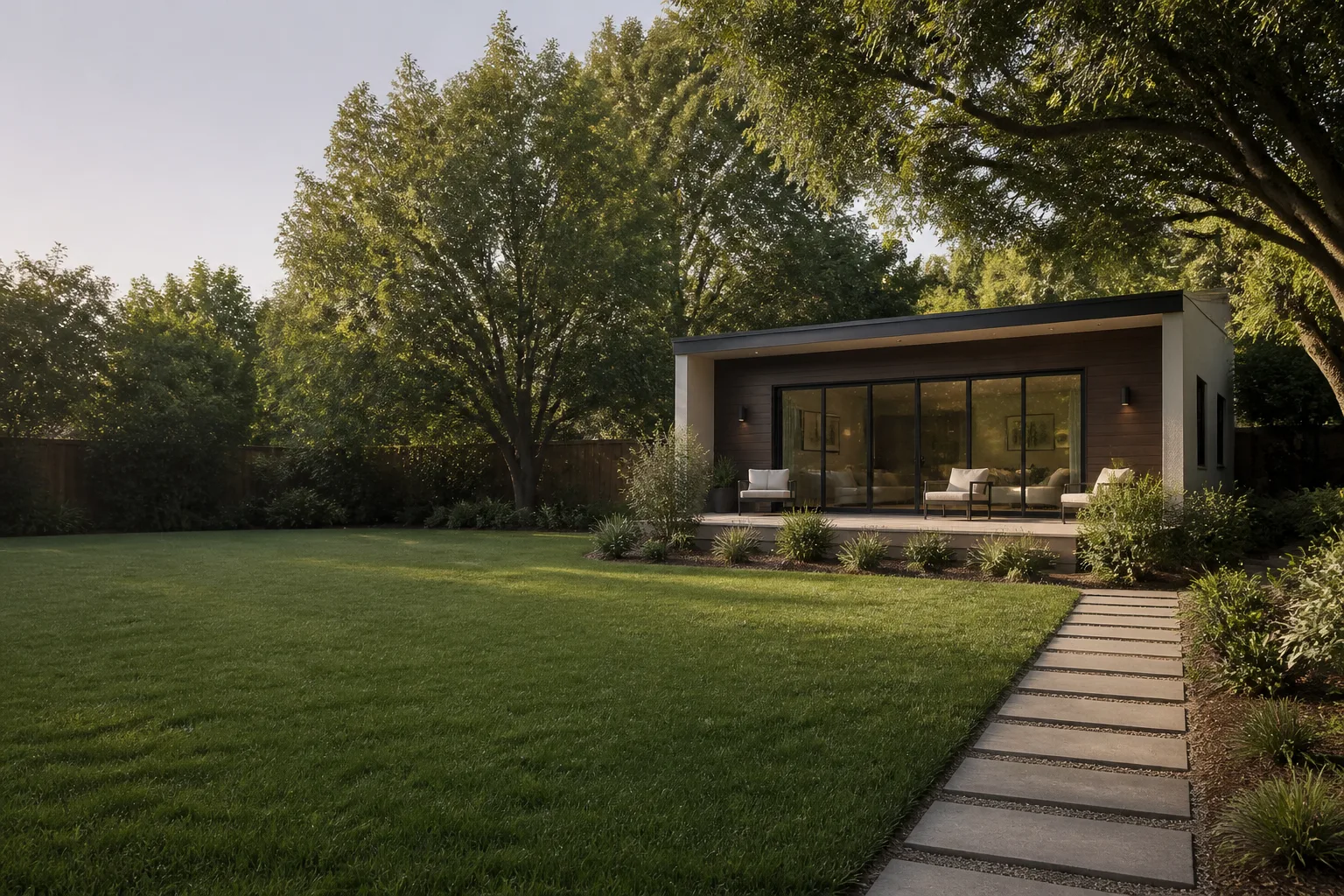
Prefab ADU. A factory-built unit from a designer like Cover or Dvele, sited and installed on your lot. The design is largely set, which shortens the design phase, and factory construction moves faster than site-built. The right fit when your lot works with a standard unit footprint and you want a defined, design-forward result.
Custom ADU. Designed to your lot, your property, and your goals. The right fit when the lot has constraints, when you want the ADU to match the property’s architecture, or when your program – a JADU, a garage conversion, a home addition – needs its own layout.
Garage conversions and junior ADUs. The most direct entry points when you’re unsure where to start. A garage conversion reuses an existing structure, which makes it attractive on lots where a detached ADU is tight. A junior ADU works within a home’s existing footprint, which is the route to consider when the goal is a smaller unit inside the primary residence. Both are the fastest, most cost-effective paths for most homeowners starting out.
Ask any builder you interview which of these they can actually deliver. A builder who only does one has to steer you toward it. A builder who does all four can match you to the right path based on what your lot and budget allow.
Common Mistakes to Avoid
- Vetting for construction experience rather than ADU experience. A long build résumé is not an ADU résumé. Ask for the permit record, not the portfolio. A contractor who’s built dozens of homes but permitted zero ADUs in Tacoma is a beginner on your project.
- Skipping the permit history pull. Reviews and references are easy to arrange. A permit pull is a matter of record. Ask for it before you sign.
- Signing a contract without a permit contingency clause. Without one, plan revisions and additional review costs land on you. Read for that clause and ask the builder to walk you through it.
- Taking a bid at face value. Allowances, missing permit line items, and no pre-application step are the three most common signs a bid will grow. Ask for detail before you accept a number.
- Agreeing to calendar-based payments. Draws tied to dates hand control to the builder. Draws tied to verified milestones keep the risk shared. Insist on the milestone schedule.
- Hiring a contractor who hands off design. If design and permitting aren’t in the contract, you’re hiring an architect and an expediter separately before the builder will start. That’s coordination you’ll manage, not them.
- Choosing a builder who only offers one path. A prefab-only or custom-only builder steers you toward their own model. You want a builder who can match you to the right path based on your lot.
When to Call a Professional
If you’re not sure whether you should start with a garage conversion, a JADU, or a detached ADU, that’s the moment to call. The right first conversation walks through your lot, your goals, and your budget, and matches you to the path that fits – not the one a builder happens to specialize in. It’s also the right call if you have plans or a prefab unit in mind but no builder to site and install it, if you’ve been quoted a bid that has red flags you can’t sort out, or if the permit process looks like it’s going to be a problem and you want an ADU specialist to take it off your plate. ADU Builder Tacoma offers free estimates in Tacoma – call (253) 319-5983. We answer 24/7. Fast dispatch from 7am to 7pm, Sunday through Friday.
Frequently Asked Questions
Ask the builder for their ADU permit history and pull the record with the city to confirm it. Match the permits to ADU-labeled projects, check their status and closing date, and confirm the addresses are in Tacoma. A builder who’s serious about ADU work will offer the pull before you ask.
An ADU specialist treats design and permitting as part of their own scope, while a general contractor typically hands those phases to an architect or expediter. That means the specialist files plans, manages inspections, and coordinates utilities under one contract, and the general contractor does not. For an ADU in Tacoma, that difference is the whole project.
Yes, if you want a prefab unit, use an authorized installer. Manufacturer authorization means the builder has been vetted and trained on installation and code requirements for that specific product. An unauthorized installer may be able to source a unit but hasn’t cleared the manufacturer’s review, and you’ll carry that risk.
Three things: a permit contingency clause, utility coordination responsibility, and inspection scheduling. These are the parts most standard contracts leave out, and they’re exactly the parts that determine whether your project stays on track during permitting. Ask your builder to walk through each one before you sign.
Tie each draw to a verified milestone, not a calendar date. Design kickoff, permit submission, permit approval, foundation inspection, and certificate of occupancy are the natural milestones. Release each draw only after you’ve seen the verification – the permit or the inspection report – not on the builder’s word alone.
Yes. We work with both custom construction and the prefab ADU lines Abodu, Cover, and Dvele, which means we can match you to the right path based on your lot, budget, and timeline. That’s the step that comes first, before design or a contract. Call (253) 319-5983 to schedule a free estimate and start there.
The Bottom Line
Hiring an ADU builder in Tacoma is a different hire than hiring a general contractor. The questions that matter are about ADU permit history, not build history. The contract you want includes permit contingencies, utility coordination, and inspection scheduling, not just a scope of work. The payment schedule ties to milestones, not dates. And the builder who can match you to prefab or custom – and install Abodu, Cover, or Dvele systems as an authorized installer – is the one with the training to back it up. ADU Builder Tacoma specializes in ADUs and accessory structures only, and handles design, permitting, and construction under one contract. Call (253) 319-5983 to schedule your free estimate. We answer 24/7. Fast dispatch from 7am to 7pm, Sunday through Friday.
Written by the team at ADU Builder Tacoma.